When
Rosencrantz & Guildenstern
played Golf in Scotland
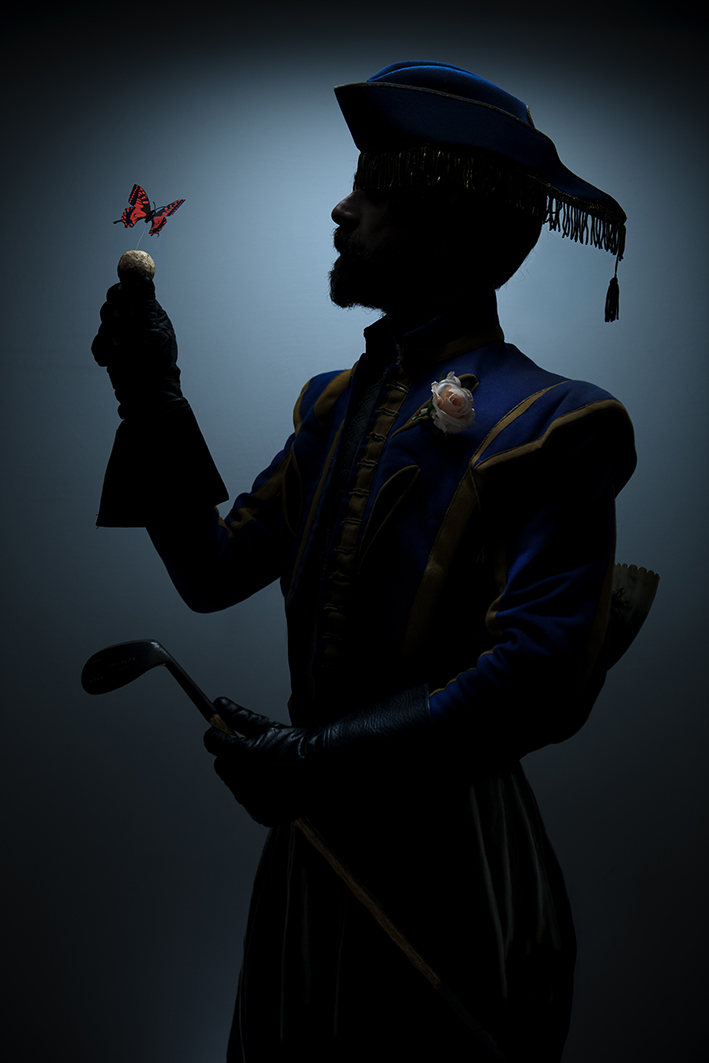
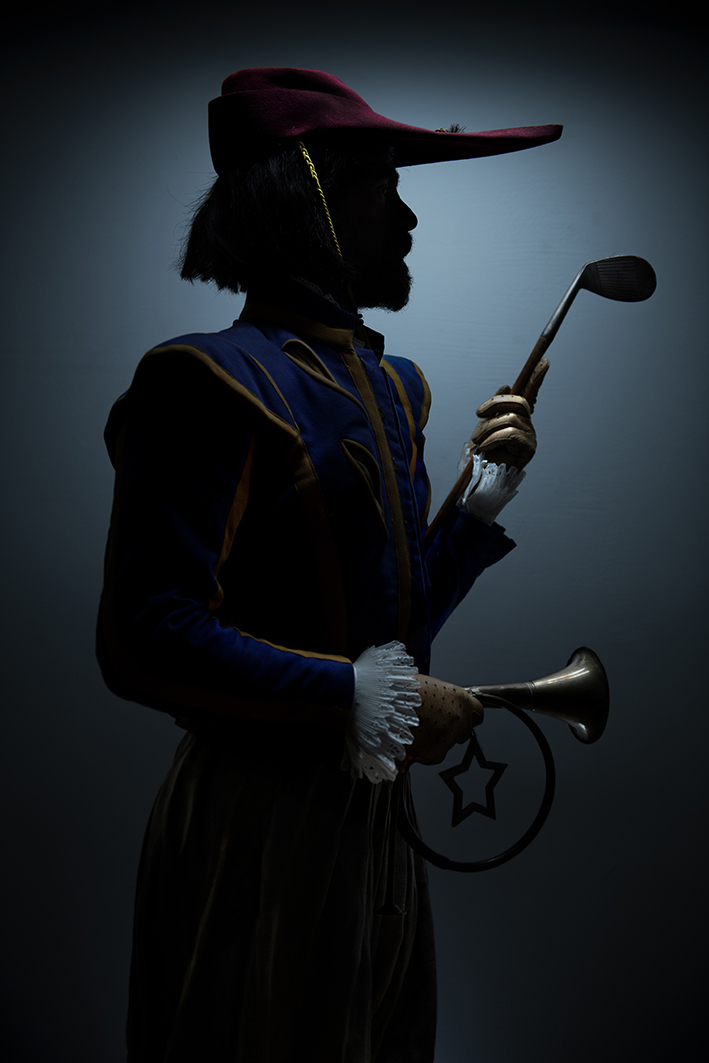
On Thursday 14, during Ars Golf at Hotel Hassler Roma, the diptych When Rosencrantz and Guildenstern played golf in Scotland will be presented, featuring the works Rosen_13 and Stern_14, dedicated to Hole 13 and Hole 14 of the Parco Golf di Roma.
Inspired by the most elusive and interchangeable characters from Shakespeare’s Hamlet — later immortalized by Tom Stoppard in their suspended irrelevance — the two works explore identity, disorientation, and human connection. Conceived as a single visual system, each image exists fully only through the presence of the other: independent yet inseparable, much like the characters themselves.
In Shakespeare’s original story, Rosencrantz and Guildenstern are sent toward England unknowingly carrying their own death sentence. Their fate remains suspended at the edge of tragedy. In this project, however, their journey changes direction: they lose their way and arrive in Scotland instead — among wind, silence, and golf courses. In a sense, the work rescues them from the destiny Shakespeare may have written for them, allowing them to disappear into another story altogether.
Ideally positioned between Hole 13 and Hole 14, the works evoke that suspended moment when the game continues, yet direction suddenly feels uncertain. They do not portray the perfect shot, but rather the pause between shots — the subtle space where everything can happen.
Part of the Black Shadow Portraits Series, the photographs draw inspiration from 18th-century silhouettes and hand-carved cameos: light constructs the shadow, shadow constructs the figure, and what remains hidden becomes an open space for the viewer’s imagination.
ITA
In occasione di Ars Golf, giovedì 14 presso Hotel Hassler Roma, verrà presentato il dittico When Rosencrantz and Guildenstern played golf in Scotland, composto dalle opere Rosen_13 e Stern_14, dedicate alla buca 13 e alla buca 14 del Parco Golf di Roma.
Ispirate ai personaggi più enigmatici e intercambiabili dell’Amleto di Shakespeare — resi immortali da Tom Stoppard nella loro sospesa irrilevanza — le due opere esplorano il tema dell’identità, dello smarrimento e della relazione. Pensate come un unico sistema visivo, le immagini vivono soltanto nella presenza reciproca: autonome ma inseparabili, come i personaggi che rappresentano.
Nell’opera originale, Rosencrantz e Guildenstern vengono mandati verso l’Inghilterra portando inconsapevolmente con sé la propria condanna a morte. Shakespeare lascia il loro destino sospeso ai margini della tragedia. In questo progetto, invece, quel percorso devia: i due personaggi sbagliano strada, si perdono, e finiscono in Scozia — tra vento, silenzio e campi da golf. In qualche modo, vengono salvati dalla loro fine scritta, trovando nello smarrimento una possibilità diversa.
Collocate idealmente tra la buca 13 e la 14, le opere evocano quel momento sospeso in cui il percorso continua, ma la direzione sembra improvvisamente incerta. Non raccontano il colpo perfetto, ma la pausa tra un colpo e l’altro — quel sottile spazio in cui può accadere tutto.
Parte della Black Shadow Portraits Series, le fotografie riprendono il linguaggio delle silhouette settecentesche e dei cammei scolpiti: la luce costruisce l’ombra, l’ombra costruisce la figura, e ciò che rimane nascosto diventa spazio aperto all’immaginazione dello spettatore.
ASCOLTA ORA SU SPOTIFY